

Air France today announced the results of research conducted to better understand and mitigate the “non-CO₂” effects of commercial aviation, particularly condensation trails, commonly known as contrails.
This initiative is fully aligned with the airline’s broader strategy to reduce the climate footprint of its operations and actively contribute to scientific initiatives supporting the aviation sector’s environmental transition.
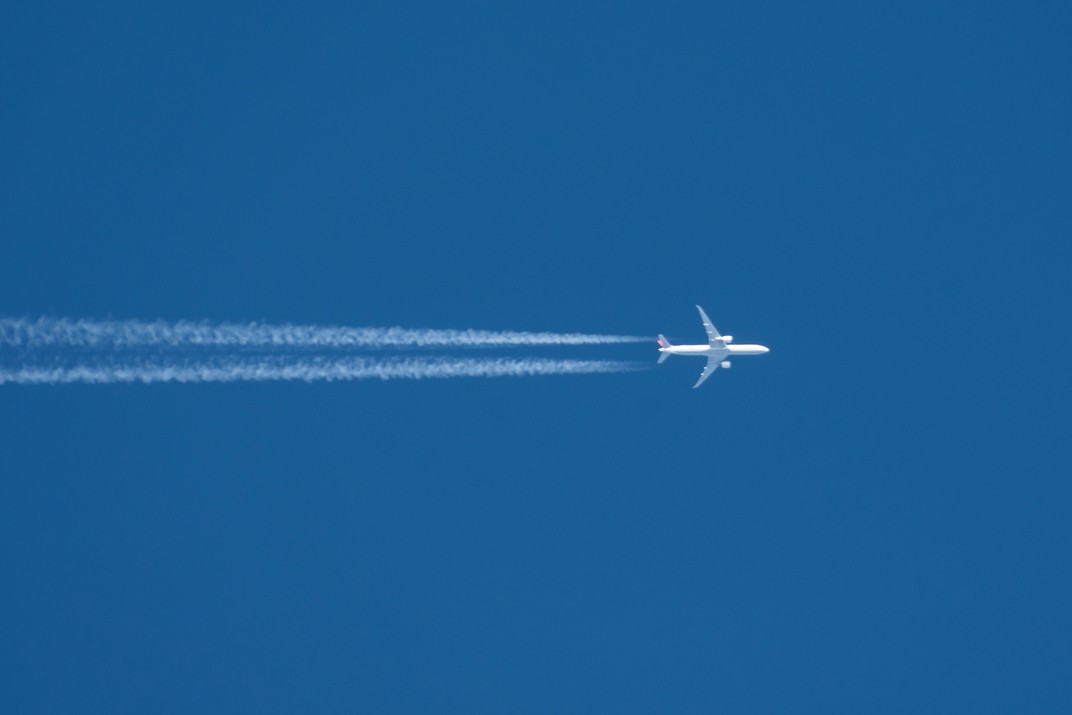
Contrails are the white trails sometimes visible behind aircraft. They form at high altitude when the atmosphere is sufficiently cold and humid for water vapor emitted by aircraft engines to condense and subsequently freeze around fine particles, including soot.
Most contrails dissipate within a few minutes. Under certain atmospheric conditions, however, they can persist for several hours, spread and form artificial clouds that may have a significant warming effect on the climate.
A series of tests involving nearly 4,300 commercial flights
Between February and April 2026, Air France conducted a targeted trial to identify and avoid areas with a high probability of persistent contrail formation.
The trial was carried out in collaboration with Estuaire and Klima, two French start-ups developing solutions to reduce aviation’s climate impact and serving as Air France’s technology and operational partners. It covered nearly 4,300 commercial flights operated over the North Atlantic, a region particularly well suited to studying these phenomena.
Through this testing program, Air France pursued two objectives: to deepen its understanding of the conditions in which the contrails with the greatest warming effect form, and to assess, under real-world operating conditions, the feasibility of flight path adjustments designed to reduce their climate impact.
Based on analyses drawing notably on weather conditions, Air France teams identified 245 flights with a high potential climate impact, for which alternative flight paths were calculated and assessed. Of these, 130 flights were effectively rerouted.
This initiative reflects Air France’s test-and-learn approach, which involves assessing scientific models and theoretical assumptions against the operational realities and constraints of long-haul air transport.
Key findings
The results of the trial show that targeted avoidance strategies can prevent contrail formation or, where prevention is not possible, significantly reduce their climate impact.
They also highlight the highly concentrated nature of non-CO₂ effects: within the scope of the trial, 3% of flights accounted for 25% of the total climate impact associated with contrails.
These findings confirm the relevance of a targeted approach focused on identifying the most climate-sensitive flights and taking action where the potential for impact reduction is greatest.
Tangible and measurable results
The results achieved were significant. Flights rerouted as part of the trial avoided a climate impact equivalent to 22,000 tons of CO₂ and reduced the climate impact associated with contrails by 8% across the trial scope.
For the flights that were effectively rerouted, the benefits were even more substantial, with a 57% reduction in the climate impact of contrails and a 36% reduction in their overall climate impact.
A collaborative approach supporting research and action
These large-scale tests were conducted as part of CICONIA, a European project bringing together a wide range of scientific partners, several airlines and air traffic control stakeholders.
The combination of Estuaire and Klima’s climate expertise with Air France’s operational know-how helped advance scientific knowledge while enabling the joint development of practical operational solutions for the benefit of the aviation industry as a whole.
This trial represents an important milestone in exploring new ways to reduce the non-CO₂ climate effects of air transport. It demonstrates Air France’s commitment to helping accelerate the deployment of measures designed to mitigate these effects.
To be fully effective, such initiatives will require close cooperation with air traffic control stakeholders, as any change to a flight path remains subject to their approval.
Vincent Etchebehere, Vice President Sustainability and New Mobilities, Air France, said:
“This testing program represents an important step in assessing, under real-world conditions, the solutions available to reduce the climate impact of contrails. The results are encouraging and will be shared as part of ongoing scientific and European research initiatives. By making its expertise and flight data available, Air France aims to contribute transparently and rigorously to identifying effective solutions that can be implemented at scale while remaining compatible with the operational requirements of air transport.”
Laurent Lafontan, Executive Vice President Flight Operations, Air France, added:
“All our teams, both on the ground and in the air, are committed to reducing the impact of our operations. Contributing to this research into contrails is a source of collective pride. Reducing these phenomena requires a better understanding of the mechanisms that lead to their formation, and this testing phase confirms that practical solutions can be implemented. We stand ready to continue this work in close cooperation with all relevant stakeholders.”
* As part of the CICONIA project (co-funded by the European Union)