

While international air services remain safe, the International Civil Aviation Organization (ICAO) is urging governments and aviation stakeholders to adhere strictly to World Health Organization (WHO) recommendations to mitigate any risk related to the current Ebola outbreak.
Since the COVID-19 pandemic, new protocols have been established by ICAO for rapid, standardized information sharing among States, airlines, airports, and health agencies. The Convention on International Civil Aviation’s Annex 9 – Facilitation has a new chapter on health-related Provisions, and corresponding guidance material is included in the ICAO Facilitation Manual (Doc 9957). Digital innovations, such as electronic health declarations and contactless border processes, have been integrated into ICAO’s recommendations to track and manage health risks more effectively.
Through the Collaborative Arrangement for the Prevention and Management of Public Health Events in Civil Aviation (CAPSCA), ICAO is coordinating with WHO and its Member States to provide risk-based and evidence-informed mitigation measures to prevent the transmission of the disease through air travel while protecting the health of aviation personnel and passengers, reassure travelers, and maintain essential air connectivity. ICAO will continue to closely monitor the situation and issue updates as necessary to Member States and aviation stakeholders, in line with WHO guidance and as the situation develops. Updates will be published on the CAPSCA website and sent to CAPSCA members as the situation evolves.
Find out more about:
Current Guidance from the WHO on Ebola
The current Ebola outbreak in the Democratic Republic of the Congo (DRC) and Uganda has been caused by the Bundibugyo virus, which does not spread through casual contact or through the air. Transmission occurs through direct contact with the blood or other bodily fluids of an infected person.
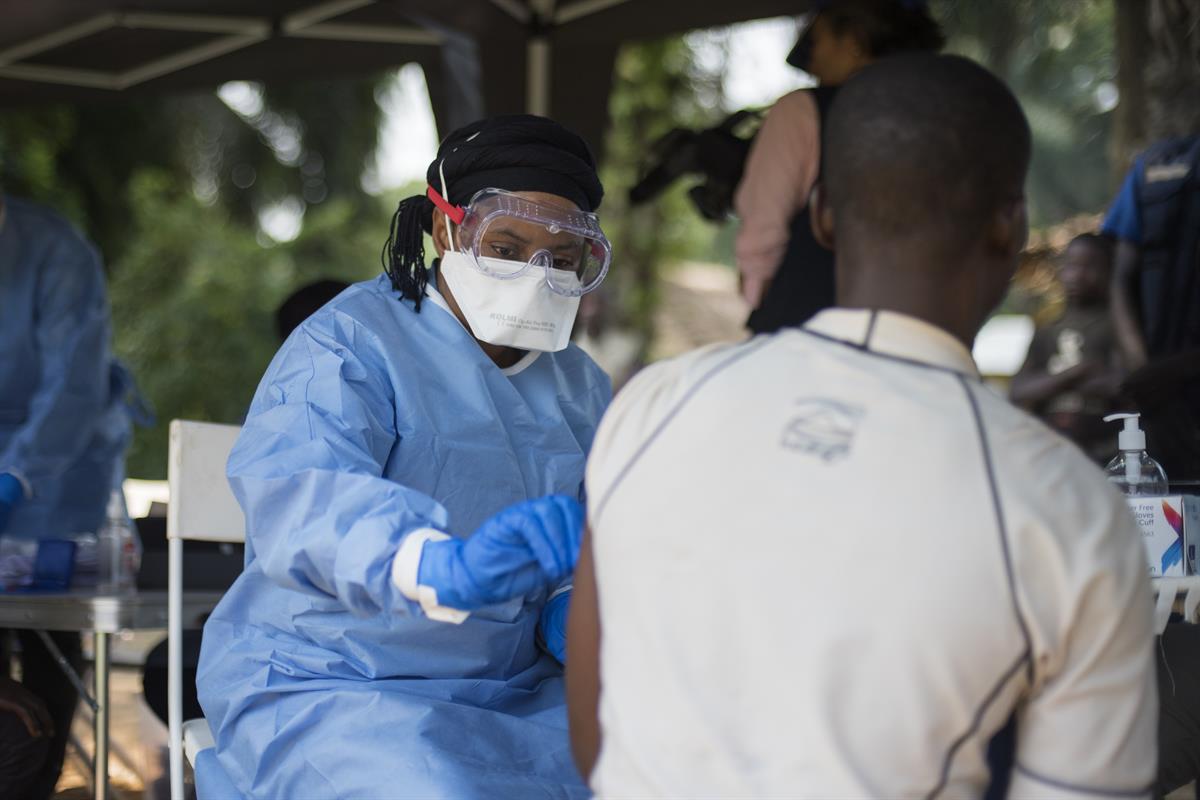
On 17 May 2026, the Director-General of the World Health Organization (WHO) determined that the outbreak constitutes a Public Health Emergency of International Concern (PHEIC). Laboratory-confirmed cases of Bundibugyo virus disease (BVD), have been reported in Ituri Province, DRC. Uganda has also reported limited confirmed cases, considered to be linked to cross-border travel from DRC. National health authorities in DRC and Uganda, supported by WHO and international partners, have implemented outbreak control measures including rapid case detection & isolation, surveillance strengthening, infection prevention and control, contact tracing, community engagement, and screening at points of entry such as airports and border crossings.
The first meeting of the WHO Emergency Committee was held on 19 May 2026. The committee agreed on the decision to declare the current outbreak as a PHEIC and not as a pandemic under the current IHR stipulations. The committee will shortly release advise on temporary recommendations for States Parties to respond to the event. Currently, WHO assesses the risk of the epidemic as very high at the national level, high at regional levels, and low at the global level.
Early supportive care, including rehydration and treatment of symptoms, improves survival.
WHO currently advises that appropriate health measures remain in place and WHO guidance be followed. Current WHO guidance advises that countries should not close borders or impose restrictions on travel and trade, and entry screening outside the affected region is not considered necessary for passengers returning from areas at risk.
Exit screening can be implemented for all persons at international airports for unexplained illness associated with fever and consistent with other symptoms of potential BVD. Health authorities should ensure that confirmed cases and contacts of BVD must be detected and isolated and such individuals do not undertake international travel unless it is part of an appropriate medical evacuation.
Note – Screening is defined as “the presumptive identification of unrecognized disease or defect by the application of tests, examinations, or other procedures which can be applied rapidly”