

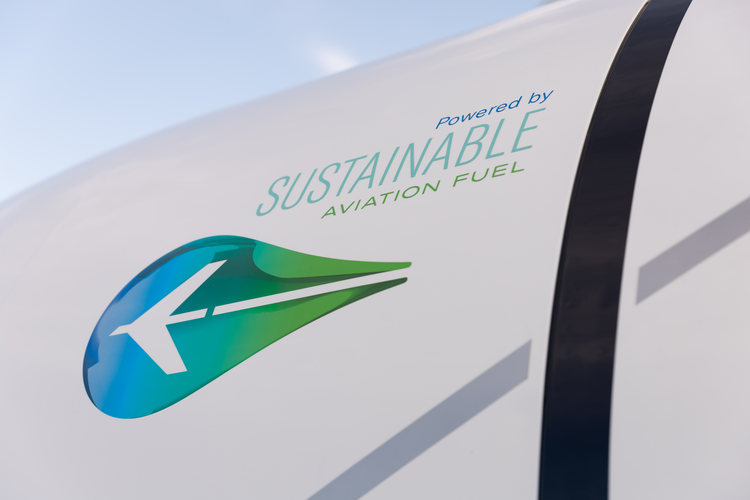
Brazil and Chile strengthen cooperation on sustainable aviation fuels, with joint goals to decarbonize the aviation sector and expand the use of biofuels in South America.
Sustainable aviation fuels gained prominence in discussions between Brazil and Chile, which are advancing in a strategic partnership focused on the energy transition of the aviation sector, according to a matter published.
The most recent meeting, held on the last 16th of October by Ministry of Mines and Energy (MME), brought together government representatives, airlines and biofuel experts.
The initiative consolidates a joint effort to make air transport cleaner and more competitive, in line with global climate goals.
The meeting was attended by Chilean Ambassador to Brazil, Sebastian Cabrera, and representatives from the Chilean Ministry of Energy, reinforcing regional alignment around decarbonization.
According to Marlon Arraes, director of MME Biofuels Department, the bilateral working group is essential to integrate public policies, share technologies and boost the market for SAF in South America.
This cooperation is part of a context of strengthening energy relations and the search for concrete solutions to reduce emissions from the aviation sector.
Biofuels and environmental certification strengthen regional competitiveness
The dialogue between the two countries highlighted the importance of biofuels and sustainability certification, a crucial element in attracting investment and ensuring international credibility.
The MME presented the guidelines for the Fuel of the Future Program, which establishes gradual targets for the incorporation of SAF, starting with 1% in 2027 and reaching 10% by 2037.
These goals are seen as a decisive regulatory framework for sustainable aviation fuels become more accessible and economically viable.
During the meeting, experts also discussed topics such as distribution infrastructure and financing mechanisms, which are considered pillars for the expansion of this market in South America.
The Chilean delegation, in turn, will visit the ANP’s Center for Research and Technological Analysis (CPT), responsible for ensuring the quality of biofuels used in Brazil.
Sustainable Aviation Fuels: Energy Integration and Decarbonization Strengthen the Aviation Transition
The Brazil-Chile partnership gains even more relevance in light of the proximity of COP30, which will take place in Brazil.
The conference places South America at the forefront of the debate on decarbonizing air transport and energy integration.
Chile, inspired by the Brazilian experience, already adopts similar policies, such as adding 10% ethanol to gasoline.
This policy exchange reinforces the role of sustainable aviation fuels as a driver of regional cooperation and innovation.
Furthermore, strengthening public-private dialogue, involving ANAC, IATA, ABEAR, and airlines such as Gol, Latam, and Azul, helps align goals and promote a coordinated transition.
The group’s next meeting, scheduled for January 2026, should define the joint work plan and implementation priorities.
Integrated public policies accelerate the future of clean aviation
The advancement of joint public policies between Brazil and Chile reinforces the construction of a sustainable energy agenda…